Thinking about buying a horse property in Pueblo West? It can be a great place to own horses, but there is one important catch: not every property in a horse-friendly area is automatically set up or approved for horse use. If you want to avoid expensive surprises, you need to look beyond the listing photos and review the lot, zoning, covenants, easements, and layout. Here’s what you should know before you buy, so you can move forward with more confidence. Let’s dive in.
Why Pueblo West Appeals to Horse Buyers
Pueblo West stands out because it is a planned community with equestrian easements and trail access. That makes it especially appealing if you want space for horses while still being part of an established community.
At the same time, horse ownership here is not a one-size-fits-all situation. The exact property matters, and the rules can vary by tract, zoning, and recorded covenants. In other words, a parcel-by-parcel review is essential before you make an offer.
Start With Lot Size and Zoning
One of the first things to confirm is whether the property’s lot size and zoning actually support your plans. Pueblo West application materials reference several residential acreage bands, including A-1 at 40 or more acres, A-2 at 5 or more acres, A-3 at 1 or more acre, and A-4 at 1/2 acre, with A-3 specifically listed as a minimum 1-acre lot area.
Pueblo West’s recorded Declaration of Reservations allows horses on lots of at least 1/2 acre, with a limit of one horse per 1/4 acre. Pueblo County’s Rural Residential district allows horses, mules, goats, llamas, or alpacas on lots of at least 1 acre, while excluding cattle, swine, and sheep.
That difference matters. Pueblo West states that when county and district rules differ, the more restrictive standard controls, so you should verify the exact tract and zone district before assuming a property qualifies for horse use.
Why “Horse-Friendly” Can Be Misleading
A listing may describe a property as horse-friendly, but that phrase does not confirm legal use on its own. You still need to verify the tract, zoning, and any recorded covenants tied to that specific parcel.
This is especially important in older or more built-out parts of Pueblo West. The community notes that enforcement rights can change in a no-standing tract once a tract is more than 90% built out, so this is another detail worth checking early in your due diligence.
Review Easements Before You Buy
In Pueblo West, easements can have a major impact on how you use the land. Utility, drainage, and equestrian easements may affect where you place fencing, corrals, runs, or other improvements.
These areas must remain open and maintained. That means even if a lot looks spacious, parts of it may not be usable the way you first imagined.
Easements Affect Layout and Daily Use
If you are planning a barn, turnout area, or pasture setup, the recorded plat matters just as much as the acreage. A property can seem like a perfect fit until you learn that an easement runs through the part of the lot you hoped to improve.
That is why it helps to review the plat and ask detailed questions before moving forward. A smart layout on paper can save you from redesigning your entire horse setup later.
Know the Rules for Fences and Structures
Horse properties often require fencing, shelters, corrals, barns, and storage buildings. In Pueblo West, those improvements are generally reviewed before construction through the Committee of Architecture for covenant compliance and through county permitting for code compliance.
Pueblo West also states that barbed wire is never approved in the community. So if you are budgeting for fencing changes or planning to build from scratch, materials and placement both need to be checked carefully.
Fence Placement Matters
Pueblo West’s fencing guidance says a vacant lot may be fenced for protection or to verify property lines. However, undeveloped parcels are not to be used as horse pasture or storage until the principal structure is built.
There are also visibility restrictions for front-yard fences, and easements must stay open and maintained. Another key point is that existing fences are often not exactly on the true property line, so you should confirm property pins before building.
Barn and Corral Setbacks
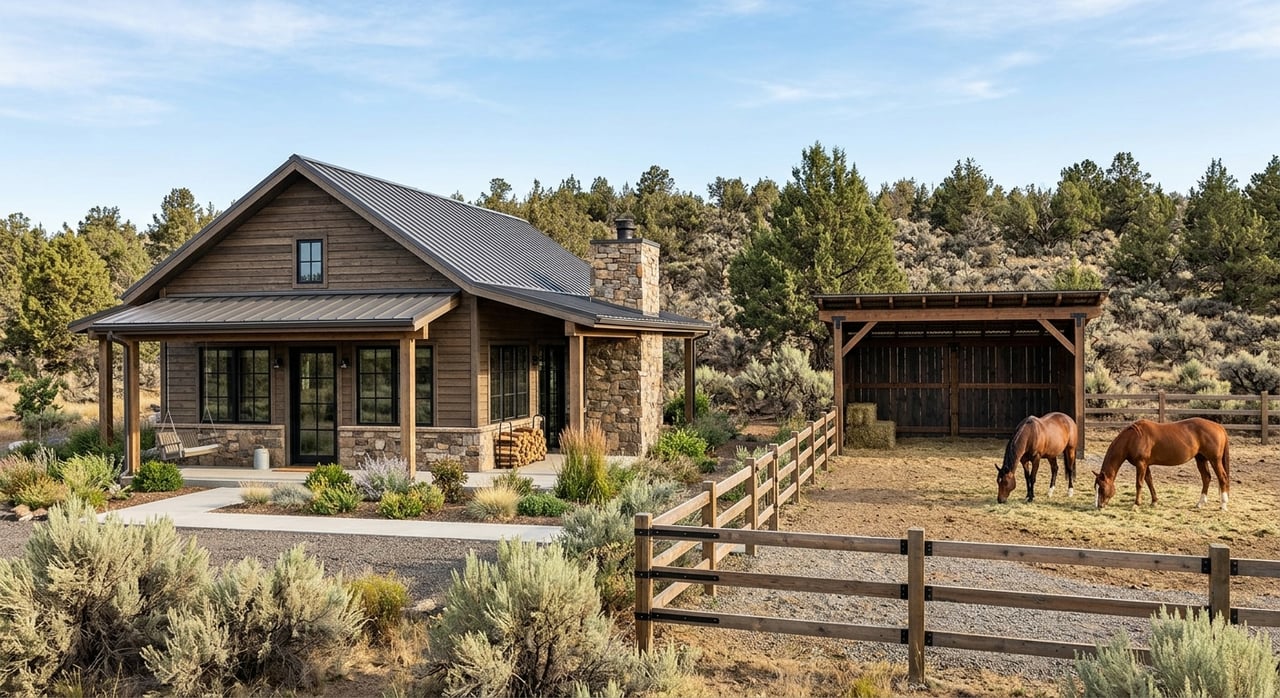
The covenants set clear placement rules for horse-related structures. Stables, barns, and corrals must be at least 50 feet from dwellings and 100 feet from the front lot line.
The area where animals are kept also needs to be maintained so it does not create pests or odors. These rules can affect how functional a lot really is, even if the acreage looks sufficient at first glance.
Livestock Shelters and Permits
Pueblo County exempts structures used solely for livestock shelter from the building code, except for electrical and plumbing matters. Even so, you should still expect separate covenant and zoning review in Pueblo West.
That means a shelter being code-exempt does not automatically mean it is approved for the parcel. It is still wise to confirm requirements before you finalize your plans.
Plan for Everyday Horse Property Upkeep
Buying the right property is only part of the equation. Day-to-day horse care requires enough stall and pen space, clean water, shelter from cold, rain, or snow, and strong fences and gates.
Colorado State University Extension also highlights sanitation, safe daily chores, and regular feeding as core parts of operating a horse property well. A property that works on paper should also work for your daily routine.
Manure Management Is a Big Deal
Manure management is one of the most important practical issues to think through before you buy. CSU Extension recommends diverting clean water away from corrals and manure storage, collecting manure frequently, and keeping manure piles away from wells and water bodies.
It also recommends reducing flies and odor by placing stockpiles away from neighbors. Pueblo County’s equestrian-facility standards similarly expect a management plan that addresses water quality, stormwater, soil erosion, manure, dust, pasture vegetation, pests, wildlife, and weeds.
Maintenance Goes Beyond the Barn
In Pueblo West, owners are expected to maintain easements and keep weeds and debris under control. This matters even more on horse properties, where fencing, turnout areas, and utility access can all overlap.
Because fences are often not located exactly on the true property line, verifying property pins or ordering a survey can be a smart step before you budget for perimeter fencing or corral improvements.
Questions to Ask Before Making an Offer
Because the rules are layered, it helps to go into every showing with a clear checklist. Asking the right questions early can protect your budget and save time during due diligence.
Here are some of the most important questions to ask on any Pueblo West horse property:
- What is the exact tract, block, lot, and zone district?
- How many horses are allowed on this parcel?
- Are any other animals permitted here?
- Are there utility, drainage, or equestrian easements on the recorded plat?
- Is the property located in a no-standing tract?
- Have existing fences, barns, sheds, or other improvements been approved?
- Where are the property pins?
- Is a survey needed?
- Is there enough room for turnout, manure storage, water access, and trailer parking?
What a Strong Horse Property Looks Like
The best horse property in Pueblo West is not just a parcel with acreage. It is a property where the covenants, zoning, easements, and physical layout all work together for your goals.
That could mean enough usable space for turnout, room to place a barn within setback rules, practical access to water, and a workable plan for manure storage and trailer parking. A thoughtful review upfront can help you find a property that supports both your horses and your long-term plans.
Buying With More Confidence
If you are shopping for a horse property in Pueblo West, details matter more than labels. A home may look like a perfect rural fit, but the real test is whether the parcel’s rules and layout match how you plan to use it.
That is where local guidance can make a real difference. If you want help evaluating horse properties in Pueblo West and comparing what is truly workable from one parcel to the next, connect with Jennifer Koslowsky Real Estate for a personalized consultation.
FAQs
What lot size do you need for horses in Pueblo West?
- Pueblo West’s recorded covenants allow horses on lots of at least 1/2 acre with a limit of one horse per 1/4 acre, while Pueblo County Rural Residential rules allow certain animals including horses on lots of at least 1 acre, so you should verify which standard is more restrictive for the specific parcel.
Can you keep horses on any Pueblo West property?
- No. Horse use depends on the specific tract, zone district, recorded covenants, and easements tied to the parcel.
What should you check before buying a Pueblo West horse property?
- You should confirm the tract, block, lot, zone district, allowed animal count, easements, approval status of existing improvements, property pin locations, and whether the layout supports turnout, manure storage, water access, and trailer parking.
Are there rules for barns and corrals in Pueblo West?
- Yes. Pueblo West’s covenants require stables, barns, and corrals to be at least 50 feet from dwellings and 100 feet from the front lot line.
Can you fence a vacant lot in Pueblo West for horses?
- A vacant lot may be fenced for protection or to verify property lines, but Pueblo West says undeveloped parcels are not to be used as horse pasture or storage until the principal structure is built.
Is barbed wire allowed on Pueblo West horse properties?
- No. Pueblo West states that barbed wire is never approved in the community.
Why is a survey important when buying a horse property in Pueblo West?
- Pueblo West notes that fences are often not exactly on the true property line, so confirming property pins or obtaining a survey can help you plan fencing, corrals, and other improvements more accurately.